

Key Takeaways
- Fabric sofas collect dust, crumbs, sweat, pet hair, and stains from daily use.
- Learning how to clean a fabric sofa at home takes a vacuum, clean cloths, baking soda, diluted vinegar, and mild detergent, used carefully.
- Cleaning codes matter, common mistakes are avoidable, and some jobs are better handled by a professional.
A fabric sofa cannot be kept properly clean with a vacuum alone. Daily use puts skin oils, sweat, food residue, dust, and pet hair into the weave faster than most household routines can lift them out. Between professional cleans, though, there is a lot you can do at home to keep the fabric fresh, catch stains before they set, and slow the build-up that eventually needs deeper attention.
Check the Sofa Cleaning Label First
Before you clean anything, look for the manufacturer’s care label. A W code means water-based cleaners are safe, an S code means solvent-based only, and a WS code allows either. An X code means vacuum only, no liquid at all. If the code is missing or unclear, skip water and cleaning products, and stick to dry methods until you know what the fabric can handle.
What You Need to Clean a Fabric Sofa
Have a vacuum with an upholstery attachment, a few clean microfibre cloths, a soft brush, mild dish soap, cold water, and baking soda ready. Cold water is important, as heat can set some stains and shrink certain fabrics. For lighter marks and odours, diluted white vinegar or a proper upholstery cleaner can help. Whichever cleaner you reach for, test it on a hidden section first.
How to Clean a Fabric Sofa Step by Step
The method below works for most W and WS fabrics. The principle throughout is the same. Clean gently, keep the fabric damp rather than wet, and let it dry fully before use.
Step 1: Vacuum the sofa
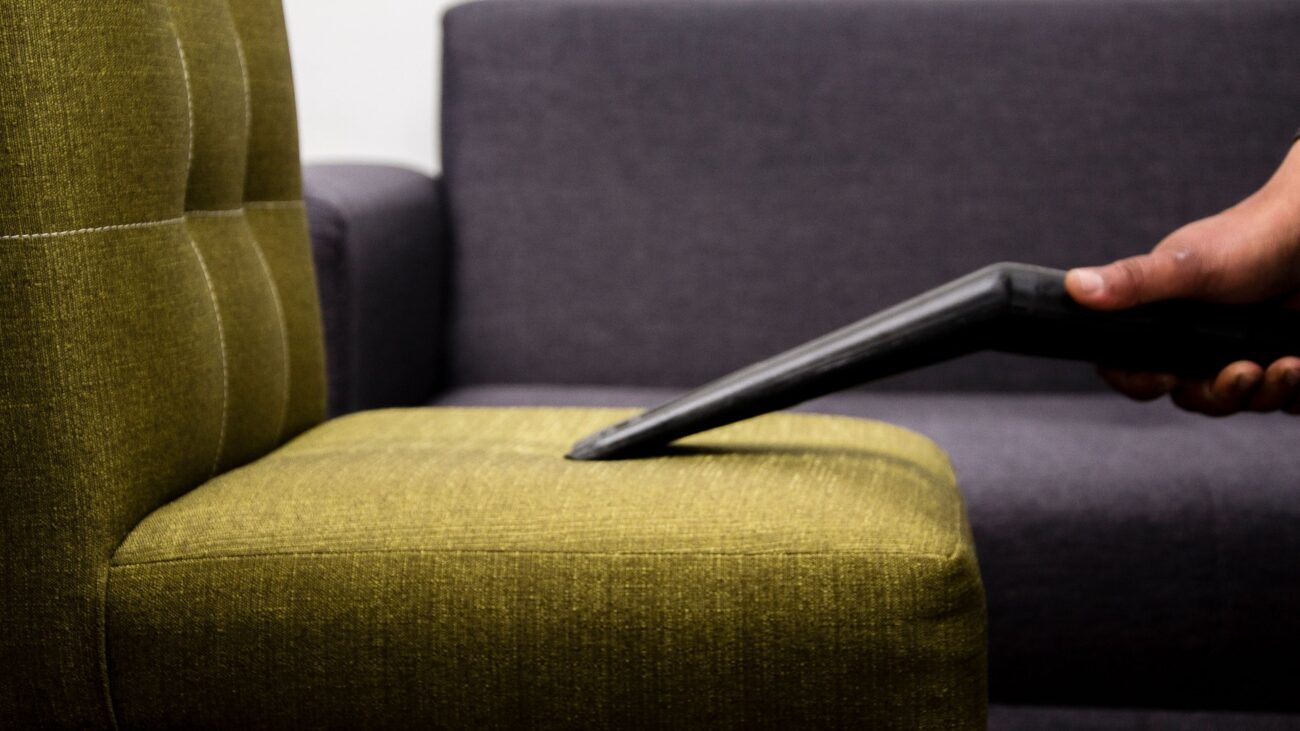
Remove the cushions where possible and vacuum the surface, seams, corners, and crevices. Use the upholstery attachment to lift dust, crumbs, and pet hair. Vacuuming first stops loose debris turning muddy the moment moisture is added.
Step 2: Spot test your cleaner
Apply a small amount of your cleaning solution to a hidden area. Wait for it to dry and check for fading, staining, or a change in texture. Only continue if the test area still looks normal.
Step 3: Blot fresh stains quickly
When a spill happens, blot with a clean, dry cloth straight away. Do not rub, as that pushes the stain deeper into the fibres. Work from the outside of the stain towards the centre to keep it contained.
Step 4: Spot clean with mild soap
Mix a small amount of mild dish soap with cold water. Dip a cloth in the solution, wring it out well, and dab the stain gently. Follow with a second damp cloth to lift the soap, then blot dry.
Step 5: Use baking soda for odours
Sprinkle a light layer of baking soda across the sofa and leave it for 15 to 30 minutes. Longer is fine for stronger smells. Vacuum thoroughly afterwards, and check that your vacuum filter is clean first, as fine baking soda powder can clog some household vacuums if the filter is already loaded.
Step 6: Let the sofa dry fully
Air-dry the sofa before anyone sits on it. Open windows, run a fan, or turn on the aircon to move air across the fabric. Sitting on a damp sofa traps moisture, and in Singapore’s humidity, that is a fast route to a musty smell.
Can You Clean a Fabric Sofa with Vinegar?
Diluted white vinegar can help with some light stains and odours, but it is not safe on every fabric. Check the cleaning code and spot test first. Use it sparingly, keep the mix well diluted, and never soak the fabric.
Fabric Sofa Cleaning Mistakes to Avoid
The most common damage comes from scrubbing hard, over-wetting the cushions, using bleach or harsh chemicals without checking the label, and skipping the spot test. Each one can turn a small, treatable stain into a permanent mark. Slow, gentle work almost always outperforms aggressive cleaning on fabric.
How Often Should You Clean a Fabric Sofa?
Vacuum weekly, or every couple of weeks, depending on how much the sofa is used. Spot clean spills as they happen. A deeper clean every few months is worth planning for households with children, pets, allergies, or heavy daily use. Homes without those pressures can usually stretch the interval further. The same rhythm suits mattresses, which collect a similar build-up over time. Our professional mattress cleaning sits on the same annual cycle.
When Should You Get Professional Sofa Cleaning?
Home cleaning handles surface dust, light stains, and everyday odours well. Old stains, deep-set odours, delicate fabrics, and sofas that have gone a long time without proper attention are a different job. For those, our professional sofa cleaning services combine UV vacuuming, hot-water steam extraction, and a light odouriser, with each stage working on a different layer of what has settled into the fabric. Most sofas are dry and back in use within four to six hours.
Keep Your Fabric Sofa Cleaner for Longer
Vacuum regularly so dust and crumbs never settle in. Deal with spills before they set. Keep food and drinks off the sofa where you can, particularly on lighter fabrics. In the seats that see the most use, throws and washable cushion covers take the daily wear so the sofa underneath does not have to.
Final Thoughts
Learning how to clean a fabric sofa at home comes down to the same steady habits. Check the label, vacuum properly, spot test, blot rather than scrub, and let the fabric dry fully. Baking soda and diluted vinegar have their place when used with care. For deeper stains, lingering odours, or fabrics you would rather not risk, our team can take it from there. Enquire with CleanOff for professional fabric sofa cleaning in Singapore.