


Most damage to a leather sofa happens before the cleaning even starts. People reach for a cloth and go straight to wiping, missing the dust and grit already sitting on the surface. In Singapore’s climate, that oversight is compounded by a layer of humidity most cleaning guides never mention.
This guide walks through the steps that keep a leather sofa in good condition, what to use at each stage, and where DIY care reaches its limit. The approach differs from caring for a fabric sofa, since leather reacts differently to moisture, soap, and drying.
A few basics make the whole job easier:
- A soft cloth or a vacuum with a brush attachment, for dust
- Mild dish soap and warm water, for everyday dirt
- A microfibre cloth, for applying and buffing
- A leather-specific conditioner, for aftercare
- A dry towel, for thorough drying
Start With Dust, Not Liquid
Dust and grit on a leather sofa behave like sandpaper once moisture is introduced. Before any liquid touches the surface, work over the whole sofa with a soft cloth or a vacuum’s brush attachment.
Pay particular attention to seams and crevices, where dust settles unnoticed between cushions and along stitching. A quick pass once a week is usually enough to stop it building up between deeper cleans. Skipping this step is one of the most common reasons a sofa that looked freshly cleaned ends up scratched instead.
A Simple, Safe Cleaning Solution
Mix a teaspoon of mild dish soap into two cups of warm water. This handles most everyday dirt and skin oils without needing a specialised product. Use a microfibre cloth rather than terry towelling, since it holds less water and is less likely to leave the leather saturated. Dip the cloth into the solution, wring it out well so it is damp rather than wet, and wipe in gentle circular motions.
Test the solution on a hidden patch first, such as the underside of a cushion, and leave it for 10 to 15 minutes to see how the leather responds before moving on to the rest of the sofa. Even mild solutions can react differently depending on the leather’s finish, and it is far easier to catch a problem there than on a visible panel.
Treating Spills and Stains Without Making Them Worse
Blot a spill. Never rub it. Rubbing spreads the stain outward and pushes it deeper into the leather rather than lifting it out.
Fresh spills usually respond to the dish soap solution above. Older marks, such as ink or wine, often need a leather-specific stain remover instead. If a stain has not lifted after two or three gentle passes, over roughly five minutes, that is the point to stop rather than reach for something stronger. Leather is easy to damage further with the wrong product.
Drying and Conditioning Properly
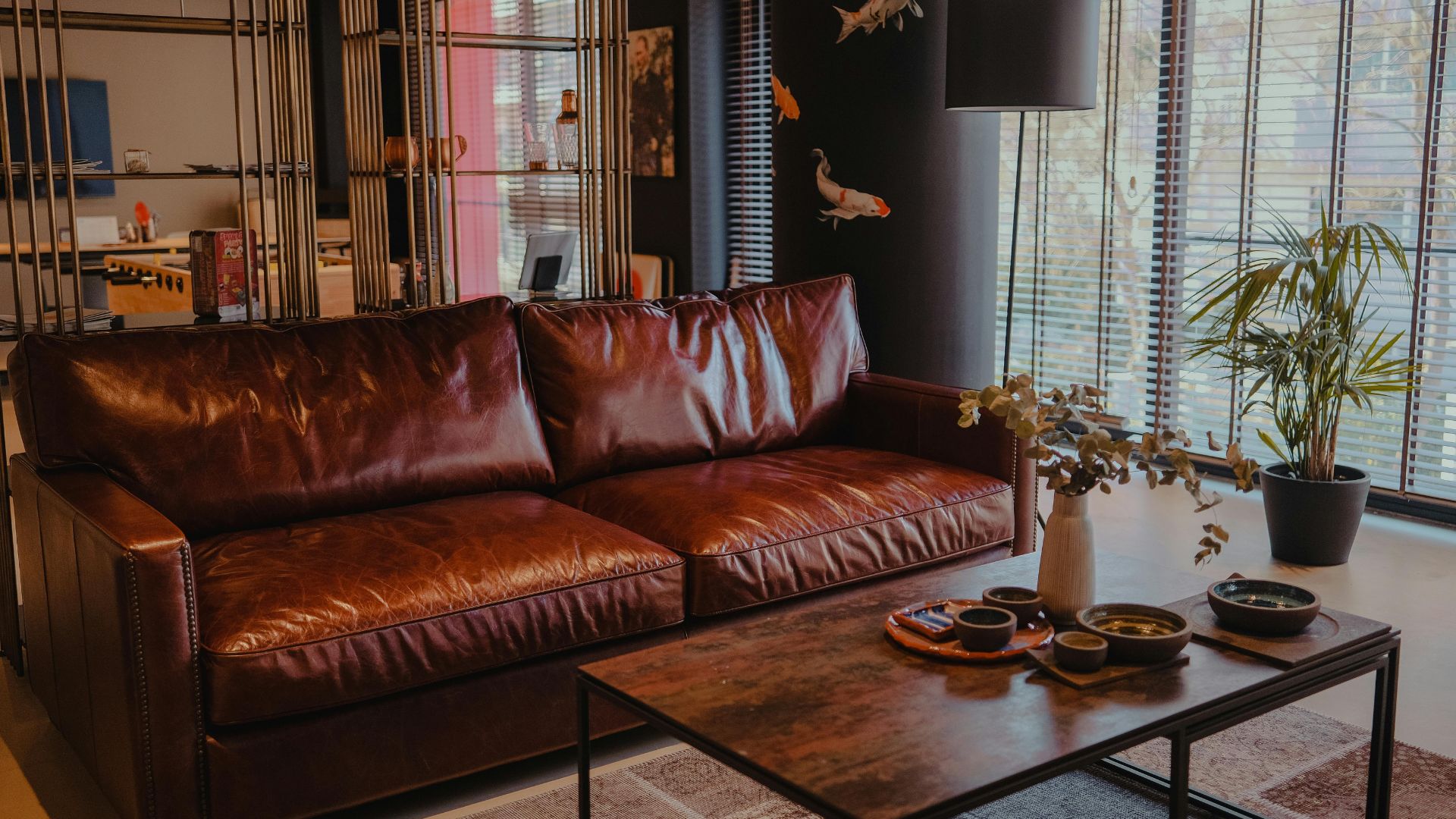 Leather absorbs moisture more readily than most fabrics, so drying it thoroughly with a dry cloth matters as much as the cleaning itself. Left damp, leather is more prone to both staining and, over time, cracking.
Cleaning also strips away some of the leather’s natural oils, which is why conditioning afterwards helps. Work the conditioner in with the same gentle circular motion, leave it to absorb, and buff once it has settled in. Most leather benefits from conditioning roughly every three to six months.
For a typical household, a full clean and condition once a year keeps a leather sofa in good order. Homes with young children, pets, or a lot of daily use usually benefit from a second round somewhere in the middle of the year.
Why Singapore’s Humidity Complicates Leather Sofa Care
High humidity encourages mould, particularly in less ventilated corners of a room. A leather sofa pushed against a damp wall or tucked into a poorly aired space is more exposed to this than one with room to breathe.
Direct sunlight brings its own risk, fading the leather and drying it out in ways that eventually lead to cracking. Keeping the sofa clear of windows and direct light helps. A dehumidifier or air conditioning that keeps indoor humidity between roughly 40 and 60 percent protects the leather more effectively than any conditioner or treatment applied once the damage has already set in.
When DIY Leather Sofa Cleaning Reaches Its Limit
Not all leather is the same. Pigmented leather has a coloured protective coating and a slightly plasticky feel, which makes it more forgiving of cleaning products. Untreated or aniline leather has a softer, more natural feel and absorbs liquid readily, which makes it far less forgiving. A quick way to tell the two apart: a small drop of water that beads on the surface rather than soaking straight in usually means the leather is pigmented and protected. If it is unclear which type is in the home, that uncertainty is itself a reason to have a professional assess it before using anything beyond mild soap and water.
Dirt that has worked its way into stitching and grain, along with stains that have already dried in, are usually beyond what a damp cloth can fully lift. This is where professional leather sofa cleaning in Singapore comes in, built around the specific leather type in question rather than one generic approach applied to every sofa.
Final Thoughts
Regular dusting, a gentle cleaning solution, and conditioning afterwards will keep a leather sofa in good shape between deeper cleans. For the wear and build-up that go beyond what home cleaning can manage, Clean Off’s leather sofa cleaning service is built around the specific type of leather in your home. If you have non-leather sofas too, our sofa deep cleaning in Singapore covers fabric and other upholstery.
Get in touch with Clean Off if it’s time for your leather sofa’s proper deep clean.